Uncategorized
RSO Ingestion vs. Topical Use: Onset, Bioavailability, and Effects Explained
Nov
The Difference: RSO for Ingestion vs. Topical Use (Onset, Bioavailability, and Effects)
Rick Simpson Oil (RSO) is a powerful, full-spectrum extract, but its effect on your body depends entirely on how you use it. This guide is critical for understanding the safety and effectiveness of your chosen method.
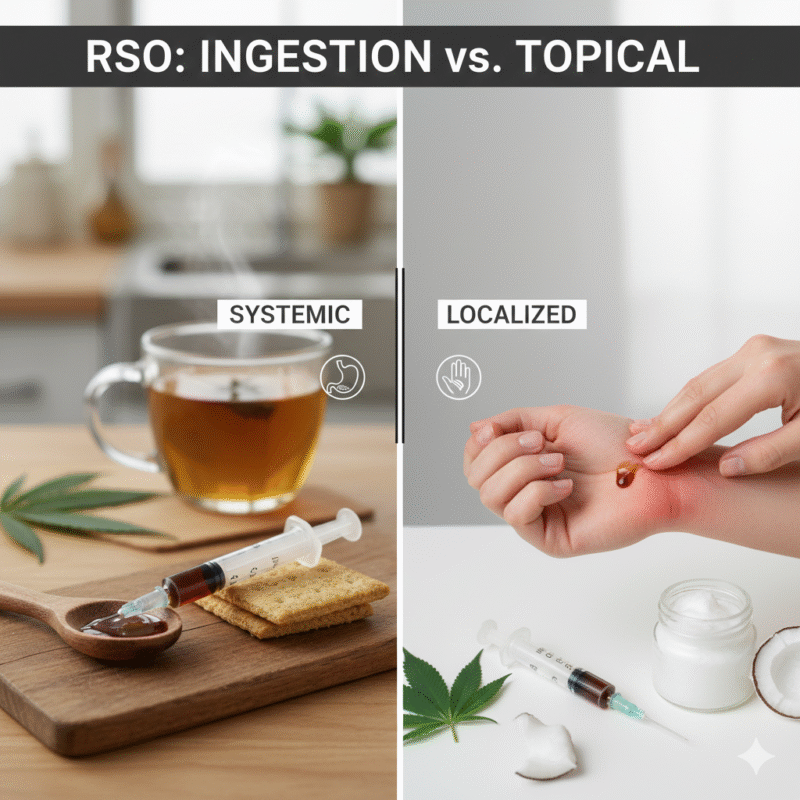
The key distinction is simple: RSO Ingestion causes strong psychoactive effects; applying Topical RSO Use directly to the skin does not cause a psychoactive high. We will break down the two distinct methods, helping you choose the right route for your needs.
Method 1: RSO for Ingestion (The Systemic Effect)
This method is designed for cannabinoids to enter the bloodstream and affect the entire body. The effects are potent and long-lasting.
Onset, Duration, and Bioavailability
- Route: The RSO is swallowed (edible) or taken sublingually (under the tongue).
- Psychoactivity: Highly Psychoactive. The THC is metabolized by the liver into the far more potent 11-hydroxy-THC.
- Onset Time: Slow (30 minutes to 2 hours for full effect).
- Duration: Long (4 to 8 hours).
- Bioavailability: Low to Moderate. Much of the THC is filtered or destroyed during digestion, making dosing critical.
- Best Used For: Systemic conditions, such as sleep issues, appetite stimulation, full-body pain management, and long-term therapeutic protocols.
Method 2: RSO for Topical Use (The Localized Effect)
This method is designed for targeted relief without any psychoactive impairment. Users often ask, “Does RSO work topically?” The answer is yes, but only on the surface layers.
Onset, Duration, and Absorption
- Route: Applied directly to the skin (e.g., on a joint, rash, or painful area).
- Psychoactivity: Non-Psychoactive. The cannabis molecules are too large to breach the skin’s barrier and reach the bloodstream. **Topical RSO Use** does not get you high.
- Onset Time: Variable (Can be within minutes to an hour).
- Duration: Short to Moderate (2 to 4 hours).
- Absorption: The cannabinoids interact only with cannabinoid receptors present in the skin layers (epidermis and dermis) for powerful localized relief.
- Best Used For: Local inflammation, surface pain, muscle soreness, and specific skin conditions.
Tips for Effective Topical RSO Use
To maximize your RSO absorption through skin, consider these tips:
- Apply Liberally: Since absorption is limited to the local area, don’t be shy with application on the affected site.
- Mix with a Carrier: RSO is very thick. Mixing it with a carrier oil like coconut oil or a moisturizing balm can help spread it easily and may boost penetration into the skin’s layers.
The Comparison Table: Ingested vs. Topical RSO
| Feature | Ingestion (Systemic) | Topical Use (Localized) |
|---|---|---|
| Psychoactive High? | Yes, highly psychoactive | No, non-psychoactive |
| Onset Time | 30 minutes – 2 hours | Minutes to 1 hour |
| Duration | 4 – 8 hours | 2 – 4 hours |
| Area of Effect | The entire body | Specific application site only |
| Key Use Case | Sleep, Systemic pain, Appetite | Joint pain, Muscle soreness, Skin issues |
Conclusion: Choosing the Right Method
RSO is highly versatile. Choose ingestion when you need whole-body, systemic effects or are following a full therapeutic protocol. Choose topical use when you need targeted, localized relief without any cognitive impairment.
Many experienced users combine both methods: ingesting a measured dose at night for sleep and applying RSO for localized pain during the day.
Next Step: If you are starting the ingestion route, ensure you follow our guide: RSO Dosing for Beginners: A Week-by-Week Schedule.
